18+ only. Gamble responsibly. Call or text 1-800-MY-RESET.Independent reviews. We may earn a commission when you sign up, which never changes our rankings.
 4 June 2025
 5 minutes to read


Blackjack side bets sound like easy money: Perfect Pairs, 21+3, or Lucky Ladies. One lucky card combo and you could hit a 25:1 or even 100:1 payout, right? Sure. But what those flashy odds don’t show is how fast they can drain your bankroll.
I’ve played side bets across dozens of blackjack tables, including live dealer games, RNG software, and crypto tables. The reality is simple: side bets are the “slot machines” of the card table. They offer high variance excitement at the cost of a punishing house edge.
In this guide, I analyze the math behind every major side bet. I look at which ones give you a fighting chance, which ones are mathematically unbeatable, and whether card counting can ever flip the odds in your favor. If you’re into blackjack side bets, pay attention.
Most blackjack side bets promise massive payouts, but the math tells a different story. Here is how they stack up.
| Side Bet | Max Payout | House Edge | Volatility |
|---|---|---|---|
| 21+3 | 100:1 | 3.2% – 10% | Medium |
| Royal Match | 25:1 | 3.7% | Low |
| Perfect Pairs | 30:1 | 6% – 11% | Medium |
| Insurance | 2:1 | 7.4% – 7.7% | Low |
| Lucky Ladies | 1000:1 | 17% – 25% | Extreme |
Key Takeaway: The standard Blackjack casino game has a house edge of ~0.5%. Even the “best” side bet (21+3) is 6x worse than the main game. Mathematically, side bets are never “good,” but some are less terrible than others.
This is the most popular side bet online. It combines your first two cards and the dealer’s up-card to form a 3-card poker hand. If you hit a Flush, Straight, Three of a Kind, or Straight Flush, you win.
Why It’s “Playable”:
The original version pays 9:1 for any winning hand. This version has a house edge of roughly 3.2%, which is actually better than American Roulette. However, many casinos use the “Volatile Paytable” (pays varied amounts like 40:1 for Straight Flush). This version increases the house edge to ~6.29%.
Advice: If the table pays a flat 9:1, it’s a decent gamble. If it has a tiered paytable, skip it.
You are betting that your first two cards will be a pair. The payout depends on the type of pair:
The Trap: This bet relies heavily on the number of decks. In an 8-deck shoe (standard for live dealer blackjack), the probability of a Perfect Pair is roughly 1.7%. The overall hit frequency for any pair is about 7.5%. This means you will lose this bet 12 times in a row on average before winning.
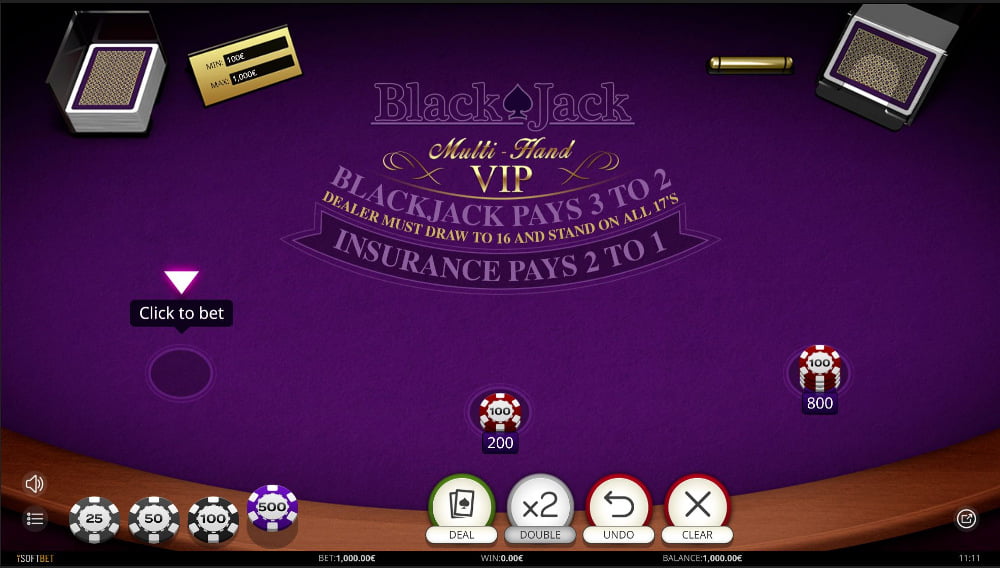
If the dealer shows an Ace, they will offer “Insurance.” This is a side bet that pays 2:1 if the dealer has a 10 in the hole (Blackjack).
In a standard shoe, there are 16 ten-value cards per deck (10, J, Q, K). That is 30.7% of the deck. So, the dealer will have Blackjack roughly 30.7% of the time.
However, the bet pays 2:1. To be a fair bet (break-even), the dealer would need to have Blackjack 33.3% of the time. The gap between 30.7% and 33.3% creates a massive house edge of ~7.4%.
Verdict: Never take insurance unless you are counting cards.
Yes. In fact, side bets are often more vulnerable to card counting than the main game.
For example, the Lucky Ladies bet pays if you get a pair of Queen of Hearts (with dealer Blackjack). If you are counting cards and know the deck is rich in Queens and 10s, the house edge flips to a player advantage. Professional teams have famously targeted the Lucky Ladies bet.
However, online casinos mitigate this by using Continuous Shuffling Machines (CSM) or shuffling the shoe at 50% penetration. This makes counting impossible online.
If you are playing with a casino bonus, check the terms immediately. Most casinos explicitly exclude side bets from wagering requirements.
Example: You bet $10 on the hand and $5 on 21+3. Only the $10 counts toward your rollover. The $5 side bet is just burning cash with zero contribution to unlocking your bonus. Avoid side bets entirely when clearing a bonus.
For those who want to verify the specific combinatorial math behind these edges, I recommend the analysis by The Wizard of Odds (Michael Shackleford). Additionally, understanding the basics of Advantage Play on Side Bets can provide context on why casinos protect these tables so fiercely.
Blackjack side bets are a tax on the impatient. They trade long-term equity for short-term excitement. While betting $1 on 21+3 occasionally won’t destroy you, making it a habit will turn a break-even game into a money pit. If you must play them, stick to 21+3 (Standard Paytable) and avoid Lucky Ladies like the plague. Your bankroll will thank you.
Mathematically, the standard version of 21+3 (paying 9:1 for any hit) is usually the “least bad” option, with a house edge of around 3.2%.
Yes. Insurance is technically a side bet on whether the dealer has a 10-value card. It pays 2:1 and has a high house edge of ~7.4%.
Yes, in land-based casinos with deep penetration. Side bets like Lucky Ladies are highly susceptible to counting. However, this is nearly impossible in online casinos due to shuffling machines.
For profit? No. For entertainment? Maybe. They increase the house edge significantly but offer jackpot-style payouts that the main game cannot match.
Mark Taylor Slot Analysis • Updated: February 9, 2026 When you press “Spin” on a slot machine, you aren’t just engaging with graphics and sound effects; you ar...

Mark TaylorChief Auditor • Updated: August 2, 2026 Dragon Gaming was not a provider I paid much attention to until fairly recently. The early catalogue was forgettable. The last...

Mark Taylor Chief Auditor • Updated: January 17, 2026 It is a suspicion every roulette player has felt. You are winning consistently with a Martingale strategy, and then—suddenl...
Mark Taylor Slot Strategy • Updated: February 2, 2026 Here is the brutal truth: most slot players have no idea how bet size impacts their results. They assume “Max BetR...