18+ only. Gamble responsibly. Call or text 1-800-MY-RESET.Independent reviews. We may earn a commission when you sign up, which never changes our rankings.
 19 June 2025
 8 minutes to read



I get this question all the time from frustrated players: Can you actually hit those multimillion-dollar jackpots? Or, are they mathematically rigged by software providers to keep players spinning in circles while draining their bankrolls?
I have spent years aggressively testing these games, tracking real payout history across global networks, and studying the restrictive fine print buried in casino terms and conditions. Here is the undeniable truth.
Progressive jackpot slots are not rigged, as long as you play at verified, licensed casinos that utilize certified gaming software. The mathematics behind these games are completely transparent if you understand how to read them.
However, that does not mean you are guaranteed a fair shot everywhere on the internet. There are pirated, rogue games out there designed to steal your money. I will show you how to spot legitimate operators, explain the internal mechanics of how these massive prize pools grow, and reveal which real slots actually pay out millions.
To understand why these games aren’t rigged, you must understand the underlying financial mechanics. Every single time you spin a progressive slot, a tiny slice of your bet—usually around 1% to 5%—is syphoned off and injected directly into a communal jackpot pool.
There are two main types of progressive games. Local Area Progressives pool money only from players within that specific casino. Wide-Area Progressives (like Mega Moolah) are linked across dozens or hundreds of different casinos globally. Thousands of players are funding the exact same jackpot simultaneously, which is why the totals routinely reach eight figures.
So, how does the game decide when the jackpot finally drops?
It is entirely governed by a Random Number Generator (RNG). The game software doesn’t “know” when the jackpot is coming, and neither does the casino operator. The RNG runs millions of complex number combinations every single second, even when nobody is playing. When you hit the “Spin” button, the RNG locks onto a sequence. If that specific sequence matches the one-in-a-billion jackpot trigger, it hits instantly.
🎰 The “Seed” Mechanism
A common question is: “When someone wins $10 million, why doesn’t the jackpot go to zero?” Software providers implement a “Seed Value.” When the top prize is won, the developer (not the casino) immediately funds the base jackpot back to a guaranteed minimum—often $1 Million or $2 Million—so the game remains attractive to play immediately after a massive win.
You’ve seen the massive headline banners, but which jackpot games actually pay out consistently? I’ve heavily tested dozens of progressive titles across US online casinos and tracked their real payout histories. Some are complete duds with punishingly low base-game RTPs, but a few have legitimately minted millionaires.
Below are the jackpot slots I trust with my own bankroll. I base my findings entirely on verified wins, smart base-game mechanics, and absolute mathematical transparency.
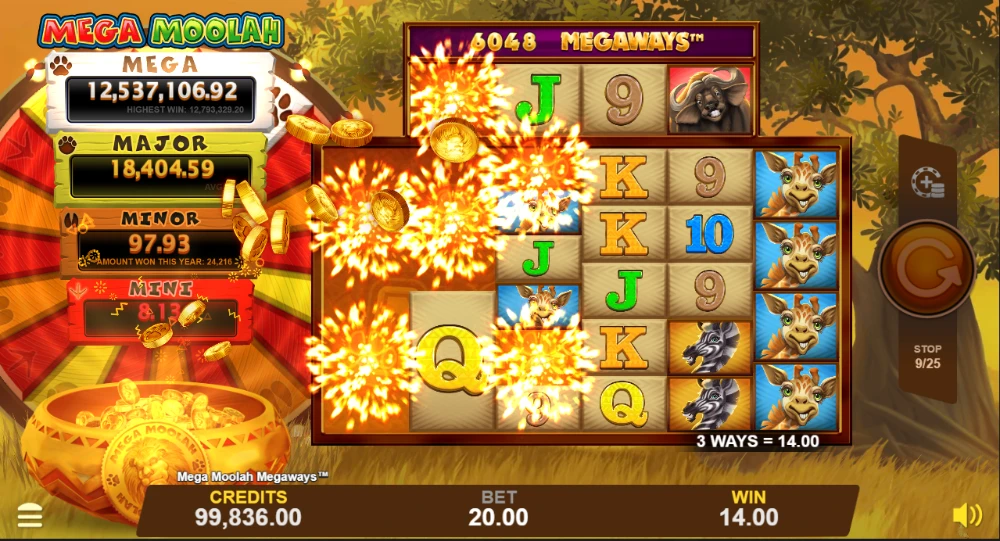
If there is a definitive king of the online jackpot sector, it is Mega Moolah. I have played this beast for over a decade. While I haven’t hit the Mega yet, I have watched smaller network jackpots fall live. What makes it structurally brilliant is that you can trigger the jackpot wheel at any time, even with a $0.25 minimum bet. And when that wheel spins? You are guaranteed one of four possible prizes.
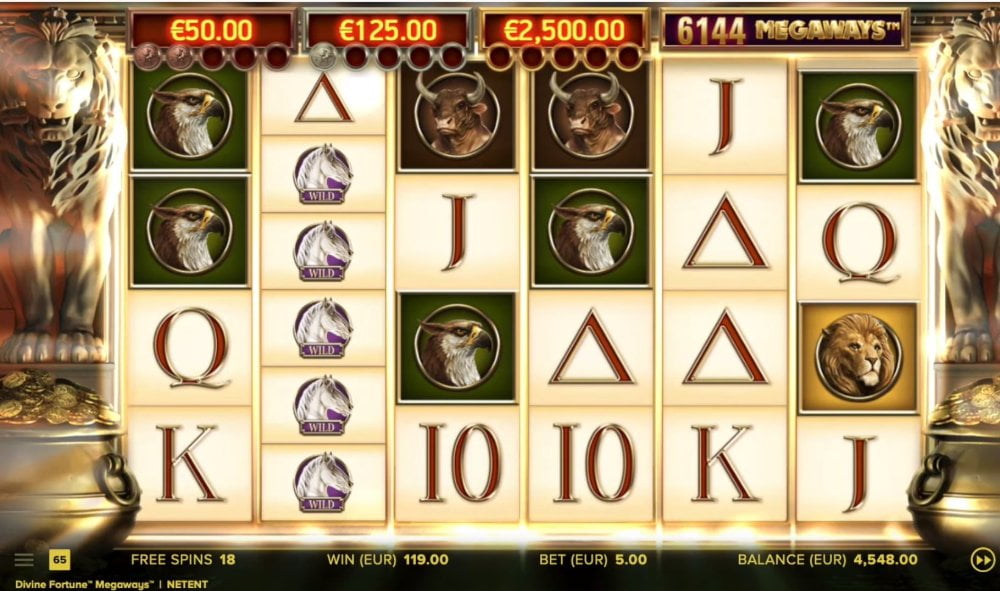
Divine Fortune is the progressive slot I pivot to when I want a jackpot game that still behaves like a highly entertaining, modern video slot. It hits the perfect mathematical sweet spot between frequent base-game wins and the occasional massive payout. You won’t find $10M here, but you will find engaging falling-wild features that protect your bankroll while you chase the top prize.

If Mega Moolah is the lottery, then Hot Drop Jackpots are highly predictable timed landmines. I actively test these across the network, and they feature a brilliant mathematical twist: the jackpots are hard-coded to drop hourly, daily, and weekly, complete with visual countdown clocks that you can monitor in real time.
I personally hit a $900 Daily Drop win on Reels & Wheels XL. These jackpots are significantly smaller than the Mega titles, but they hit aggressively fast. The optimal strategy here is playing strictly when the deadline timer is flashing red, leveraging the math of the required drop.

She flirts, she teases, and she pays. A Night With Cleo is one of the most iconic progressive slots at Ignition Casino. Behind the seductive Egyptian theme is a highly volatile jackpot slot with a wild risk mechanic: every win gives you a chance to double your money by guessing Cleo’s next move. Pick right, and she strips. Pick wrong, and you go back to the base game empty-handed.
I’ve played hundreds of spins on Cleo. While the progressive jackpot (often hovering between $75K–$250K) is entirely random and triggers without any specific symbol combination, the Gamble feature hits constantly and can double your bankroll in seconds if you can stomach the variance.
Progressive jackpot slots from licensed, tier-one software providers are heavily audited. Their RNG algorithms are ripped apart and certified by independent regulatory agencies like eCOGRA, iTech Labs, and GLI. These grueling audits ensure that every single jackpot is triggered randomly and absolutely cannot be manipulated on the backend, not even by the casino hosting the game.
However, shady offshore casinos operating without a license frequently use pirated or “cloned” software. The jackpot ticker might visually climb on your screen, but the internal RNG code has been stripped entirely, mathematically ensuring the jackpot will literally never drop. This is why playing at verified casinos is non-negotiable.
Myth: “Progressive slots are rigged because I never win.”
Reality: Jackpots are rare by mathematical design. The odds of hitting the Mega Moolah top prize are roughly 1 in 50 million. Failure to win is a product of variance, not a rigged RNG.
Myth: “Casinos control when the jackpot hits.”
Reality: Licensed casinos have absolutely no control over jackpot triggers. The outcome is securely locked inside the developer’s RNG engine on a remote server, totally inaccessible to the casino’s floor staff.
Myth: “Jackpots are always paid out in full instantly.”
Reality: While premium developers pay network jackpots in a single lump sum, many casinos stipulate in their terms that localized wins are paid in monthly $5,000 installments. This is why reading the withdrawal policy is critical.
Because the base-game RTP is inherently lowered to feed the progressive jackpot, how you structure your bets makes a massive difference in how long your bankroll will survive the inevitable dry streaks.
Progressive slots are the ultimate risk-reward mechanisms in the gambling industry. As long as you play at verified operators, the games are not rigged. The wins are undeniably real, and the jackpots absolutely can change lives—but you must accept that the mathematical odds of hitting one are exceptionally steep.
If you are actively chasing the Mega prize, go in with a strictly capped bankroll, play verified software only, and do not fall for the hype. Mix jackpot attempts into your wider sessions, but do not make them your entire gambling strategy. Play smart, protect your capital, and never chase losses.
Yes. Licensed progressive slots utilize highly advanced Random Number Generators (RNGs) that continuously cycle through millions of number combinations. The exact millisecond you hit the spin button, the RNG locks in a sequence that determines if you hit the jackpot. It cannot be manipulated by the casino.
It depends entirely on the specific game’s mechanics. Some older progressives require a maximum coin bet to qualify for the top prize. However, modern mega-progressives like Mega Moolah allow players to trigger the jackpot wheel randomly on any bet size.
If you hit a legitimate network jackpot (like Microgaming) at a licensed casino, the software provider usually pays you out directly from their communal network pool. If an operator delays a localized win, you must immediately file a formal dispute with their regulatory authority.
They serve different purposes. Hot Drop Jackpots are mathematically programmed to trigger before a specific time limit (hourly or daily), making them much easier to strategize around. Normal progressives grow much larger but have absolutely no time constraints.

IP Tracking, VPNs & Offshore Casinos Explained Yes, online casinos detect your IP the moment you connect. Offshore casinos use it for location control, AML screening, and fr...

Casino Security Analysis by Mark Taylor Updated: March 3, 2026 Forget the Hollywood-style hackers or the old-school casino pit bosses staring at grainy surveillance monitors. In...

Bots, Shill Accounts and Scripted Chat, Examined Live Casino Analysis by Mark Taylor Updated: August 3, 2026 The Short Answer Licensed live casinos running studio software from ...

Mark TaylorChief Auditor • Updated: August 2, 2026 Most established online casinos are legitimate. They license their games from outside studios, they run on software they canno...