18+ only. Gamble responsibly. Call or text 1-800-MY-RESET.Independent reviews. We may earn a commission when you sign up, which never changes our rankings.
 20 June 2025
 6 minutes to read



I have professionally reviewed over 200 crypto casinos, and I have seen every sophisticated scam in the book. We are talking about highly convincing fake licenses, arbitrary withdrawal blockages, mathematically rigged software, pump-and-dump altcoin schemes, and rogue operators that completely disappear overnight with millions in player funds.
The devastation is incredibly real. I have investigated cases where a player lost $120,000 when an operator maliciously deleted his backend betting history. I have seen others have their entire Ledger balances drained through a fake “wallet integration” phishing scam masked as a deposit portal.
These are not isolated, one-off occurrences; they happen daily. Scams in the blockchain space follow highly predictable operational patterns. If you are gambling with Bitcoin, Ethereum, or USDT, the decentralized nature of the currency means there are no chargebacks. Once your money is sent to a rogue address, it is permanently gone.
In this technical guide, I will break down exactly how these crypto casino scams operate on a code level, how to identify their specific red flags, and the operational security protocols you must deploy to protect your bankroll without getting burned.

Modern scam casinos look incredibly professional. They feature highly responsive HTML5 homepages, slick branding, and purchased affiliate deals with well-known web portals. However, behind the flashy UI, they operate completely unlicensed. They rely on domain spoofing—registering a URL that looks nearly identical to a trusted brand.
You deposit your crypto, play, and win. That is exactly when the trap springs. When you attempt to withdraw, you are hit with endless stalling tactics: fabricated “KYC compliance issues,” fake “network security delays,” and sudden accusations of “terms violations.” You will never see your cashout.
The Real Example: Bitcoin Private Casino (2021)
Marketed itself aggressively across social media as a high-return crypto gambling site. After collecting millions in player deposits over six months, they suddenly flagged all winning accounts for “security audits,” blocked every withdrawal attempt, and pulled the server offline. No player ever recovered their BTC.
How to Beat It: If a casino cannot display a verifiable, clickable license seal from Curacao eGaming or the MGA, close the page immediately. A static PNG image of a license in the footer is a massive red flag.
Scam casinos weaponize human greed by dangling impossible offers like “500% Match Bonuses” or “Unlimited Zero-Wagering Free Spins.” But buried deep in the Terms & Conditions—if they even bother to publish them—are mathematical roadblocks designed to completely zero out your balance.
We are talking about 100x Wagering Requirements (WR), maximum win caps of $20, and brutal game restrictions. The casino lets you win virtual money, but the moment you try to convert it to a real blockchain withdrawal, they confiscate the funds legally under their predatory terms.
My Personal Test Case:
I tested an offshore crypto casino offering a massive 300% match bonus. I meticulously cleared the playthrough requirements playing base slots. When I initiated the withdrawal, the support team cancelled it, pointing to a vague, hidden clause: “Playing games with multiplier features voids all active bonus funds.” They weaponized their own ambiguity to steal my deposit.
A highly sophisticated modern scam involves casinos launching their own native ERC-20 or BEP-20 “tokens” with inflated promises. They rope players in by offering massive staking rewards, exclusive VIP tiers, and dividend payouts if you purchase and hold their native coin.
What the whitepaper conveniently omits is that the developers hold 90% of the token supply and the coin has absolutely zero off-site liquidity. These operate as classic “rug pulls.” They hype the token to drive up the fiat value, get players to swap their valuable Bitcoin for the worthless casino token, and then the developers drain the liquidity pool and vanish.
Legitimate crypto casinos utilize Provably Fair cryptographic algorithms (allowing you to verify the server seed and client seed hashes) or host heavily audited games from tier-one providers. Scam sites do neither.
They use “iFrame cloning” to rip the visual interface of popular slots (like Pragmatic Play or NetEnt) while replacing the backend code with a rigged Random Number Generator. You think you are playing a certified game with a 96% RTP, but the rogue code ensures the house edge is closer to 80%. You are not playing against the odds; you are playing against malicious code.
Do not deposit a single Satoshi until you run the casino through this exact scorecard. If a site triggers two or more of these warnings, close the tab.
Scams follow a highly predictable operational timeline. Recognize the pattern before you become the victim.
Crypto gambling moves at lightning speed, pays out globally, and entirely cuts out bureaucratic fiat banking delays. However, that exact financial freedom is precisely what attracts the most sophisticated malicious actors in the world.
I have tested hundreds of sites. The legitimate ones processed my Bitcoin payouts securely in under 10 minutes. The fake ones utilized every trick on this list to steal my deposits. My absolute final rule: If you cannot instantly verify the license, the cryptographic fairness, and the support responsiveness, walk away.
Legitimate crypto games offer a “Provably Fair” tool allowing you to check the cryptographic hash of your spin. If the casino only hosts unknown proprietary games without this tool or third-party audits, assume the software is rigged.
No. Because blockchain transactions are entirely decentralized and immutable, there is no bank or authority that can issue a chargeback. Once you send crypto to a rogue wallet address, the funds are permanently gone.
A rug pull occurs when a casino launches its own native token, heavily promotes it to players to drive up the price, and then the developers suddenly withdraw all the underlying liquidity, crashing the token’s value to zero.
A Curacao license guarantees basic regulatory oversight and software fairness testing, making the casino generally safe to play at. However, Curacao is known for having a slower dispute resolution process compared to European regulators like the MGA.
The Truth About Rigged Tables Casino Mathematics by Mark Taylor Updated: March 10, 2026 “The casino flipped the result literally a millisecond after I placed my bet.” I have hea...

Mark TaylorChief Auditor • Updated: January 18, 2026 If you are still deciding between Bitcoin and Ethereum for online gambling, you might be asking the wrong question. In 2026,...
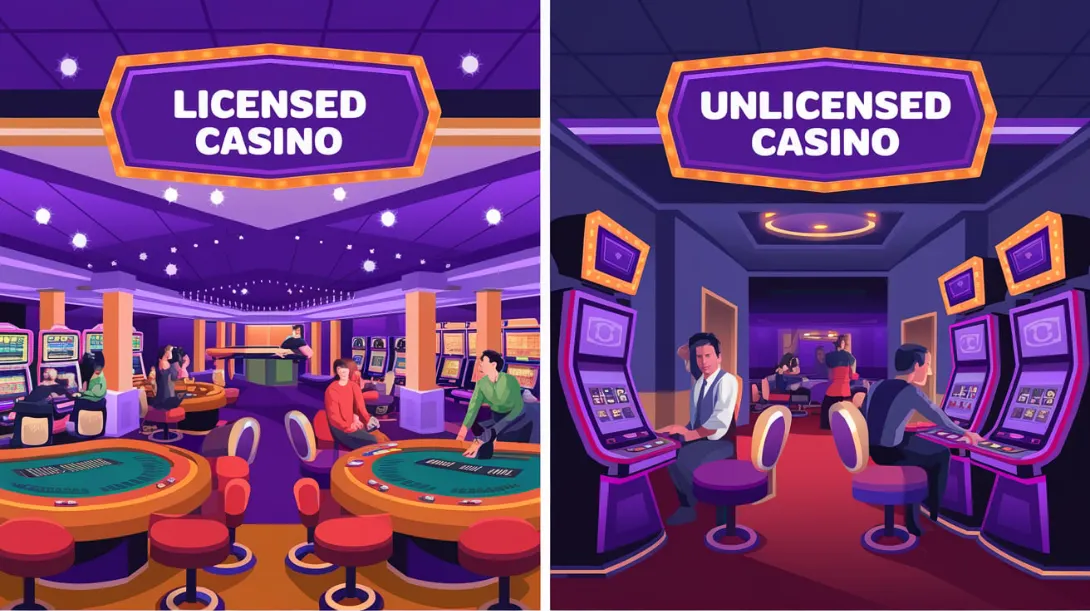
Regulatory Audit by Mark Taylor Updated: February 20, 2026 Most players never bother to check an online casino’s licensing credentials. They see the flashy games, the massive pr...
Do Online Slots Change RTP Based on Your Winnings? The Mathematical Truth About Rigged Algorithms Casino Mathematics by Mark Taylor Updated: March 9, 2026 We have all experience...

