18+ only. Gamble responsibly. Call or text 1-800-MY-RESET.Independent reviews. We may earn a commission when you sign up, which never changes our rankings.

 3 March 2025
 5 minutes to read


It is a suspicion every roulette player has felt. You are winning consistently with a Martingale strategy, and then—suddenly—the ball lands on Zero three times in a row. It feels personal. It feels intentional.
The question is: Did the casino flip a switch? Can they legally adjust the Random Number Generator (RNG) in real-time to counter your betting pattern?
The short answer is: Regulated casinos cannot, but unregulated ones absolutely do. In this audit, I break down the difference between “Dynamic RTP” (cheating) and standard House Edge, and how to spot if you are playing a rigged game.
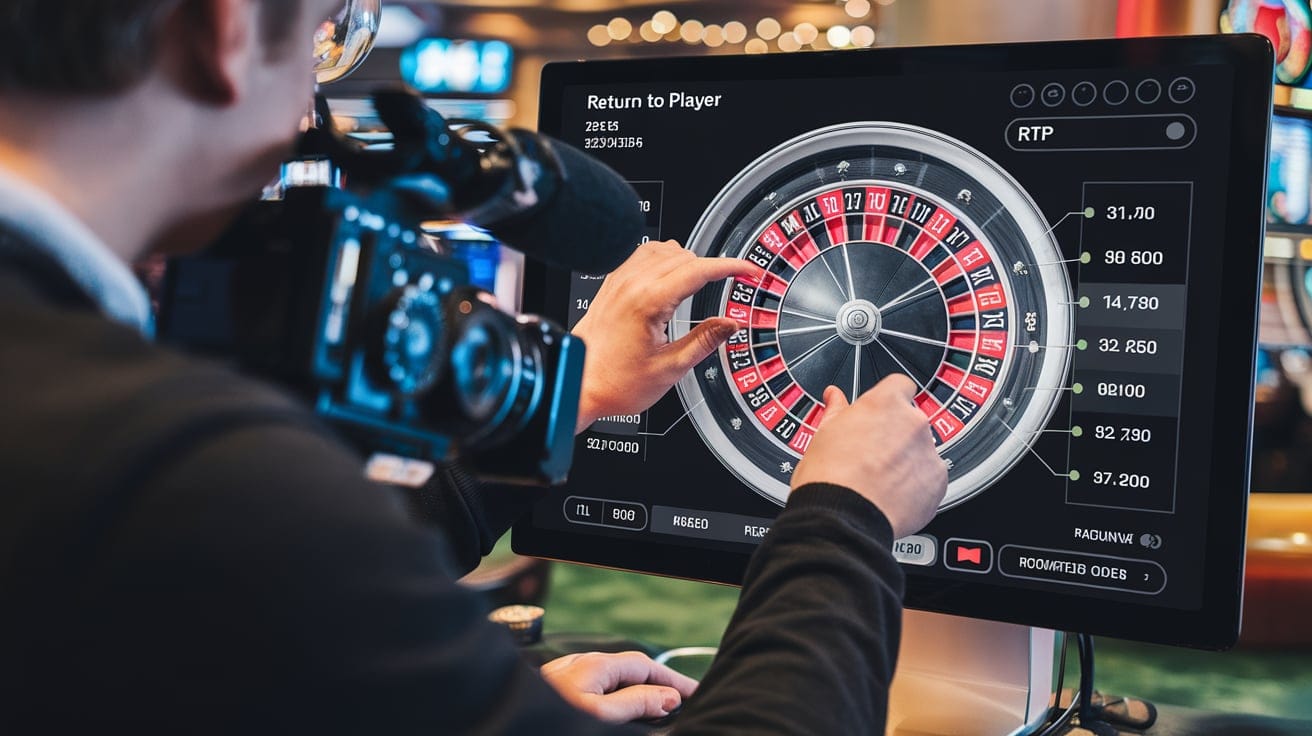
To understand if the odds are shifting, you first need to understand how the game is coded. In a fair environment found at reputable online casinos, the software uses a Pseudo-Random Number Generator (PRNG).
The code works like a deck of cards that is shuffled every millisecond. When you press “Spin,” the software grabs the top card (number). The odds are hard-coded: 1 in 37 for European Roulette (2.70% House Edge).
This math never changes. It does not matter if you bet $1 or $1,000; the algorithm is blind to your stake.
In pirated software (often found at unlicensed sites), the code has a secondary “Profit Check” instruction. Before the ball lands, the server checks: “If Player wins, does Casino Profit drop below X%?”
If the answer is Yes, the software re-spins internally until it finds a losing number. This is illegal, undetectable to the naked eye, and exactly why we warn against black-market sites.
Live Roulette is broadcast to thousands of players simultaneously. This makes “targeted rigging” nearly impossible. If the dealer forces a Red number to make you lose, they might inadvertently pay out 500 other players who also bet on Red.
However, live dealer roulette streams are not immune to scandals. Here are the known methods (and myths):
Yes, casinos track every single bet. But they aren’t using this data to change the ball physics; they are using it for Risk Management.
If you are winning consistently using a system (like Martingale or Labouchere), the casino won’t “rig” the wheel. Instead, they will use legal countermeasures:
The only thing stopping a casino from adjusting the odds is Regulatory Oversight. This is why license jurisdiction matters more than game selection.
| Feature | Licensed (UKGC/MGA) | Unregulated (Rogue) |
|---|---|---|
| RNG Source | Hosted by Provider (e.g., Evolution). Casino cannot touch it. | Self-Hosted or Pirated. Casino has full control. |
| Audits | Monthly checks by eCOGRA/iTechLabs. | None. “Trust us.” |
| RTP Disclosure | Must be displayed in Help files. | Hidden or misleading. |
While subtle rigging is hard to prove without millions of data points, there are visual red flags you can spot immediately.
🚩 The “Lag” Glitch
If the game consistently “freezes” or lags right before the ball lands, the software might be communicating with the server to determine a losing outcome. Smooth animations are a sign of pre-determined RNG.
🚩 Impossible Physics
In RNG roulette, watch the ball deceleration. Does it stop abruptly? Does it “slide” into a pocket rather than bounce? Poorly coded pirate games often have unnatural physics engines.
If you suspect foul play, you can verify the game’s authenticity. Right-click the game window and check the “Server Source.” If it doesn’t originate from the official provider’s domain (e.g., evolutiongaming.com), leave immediately.
If you simply cannot trust traditional casinos, the solution lies in blockchain technology. Crypto casinos often feature “Provably Fair” roulette.
How it works: Before the spin, the casino generates a “Server Seed” (the result) and hashes it (encrypts it). You are given this hash. After the spin, the seed is revealed. You can verify that the result was decided before you placed your bet, proving the casino didn’t change the outcome based on your wager.
Legitimate casinos do not. The return to player mechanics are fixed by the developer. However, rogue casinos using pirated software have been caught using “adaptive math” that lowers wins after a profit threshold is met.
It is not “rigged,” but it has worse odds. The double zero (00) increases the House Edge to 5.26%, compared to European Roulette’s 2.7%. Always play European if possible.
It is highly debated. While “sector targeting” is theoretically possible for elite dealers, casinos rotate staff every 20 minutes and alternate wheel directions to prevent rhythm.
Independent labs like eCOGRA and GLI test the RNG engines for randomness. Look for their seals in the website footer.
Casinos don’t need to rig roulette; the green zero guarantees them a profit over time. While “Dynamic Odds” exist in the dark corners of the internet (unregulated sites), mainstream licensed casinos have no ability to alter the game code. Your best protection isn’t a betting system—it’s checking the license footer before you deposit.

Mark Taylor Casino & Sports Strategy • Updated: January 20, 2026 Every gambler eventually asks the same question: “Is it easier to beat the dealer or the bookie?”...

Mark Taylor Slot Analysis • Updated: February 6, 2026 Penny slots aren’t just for “broke” players. They are the secret weapon of smart bankroll management. I have pl...
The Mathematical Truth About Beating the Wheel Casino Mathematics by Mark Taylor Updated: March 16, 2026 I have mathematically tracked and played thousands of real-money online ...

Mark Taylor Slot Strategy • Updated: February 2, 2026 Here is the brutal truth: most slot players have no idea how bet size impacts their results. They assume “Max BetR...