18+ only. Gamble responsibly. Call or text 1-800-MY-RESET.Independent reviews. We may earn a commission when you sign up, which never changes our rankings.
 17 February 2025
 4 minutes to read


Do you ever wonder why Cash Bandits 3 feels incredibly loose at one casino, but drains your bankroll in minutes at another? It is not just your imagination—it is a feature of the software.
Unlike some providers that lock their math models, RealTime Gaming (RTG) offers operators a feature called “Selectable RTP.” This allows the casino manager to choose how generous the game is.
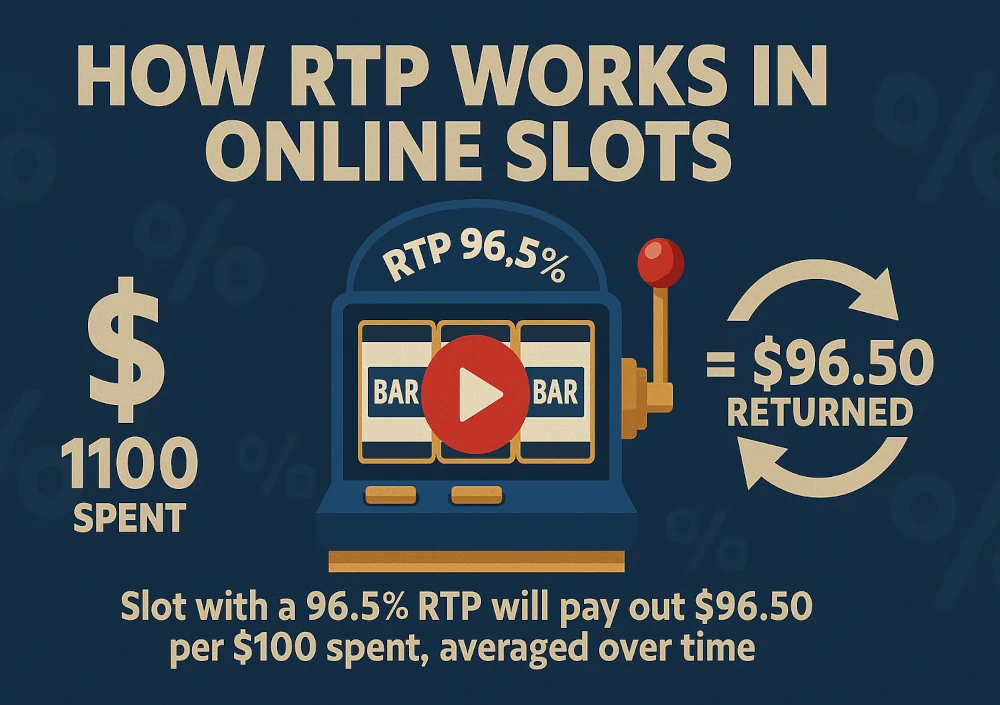
Yes, operators can adjust the RTP (Return to Player) within a set range. They aren’t being dishonest, as this is a standard industry practice, but they rarely tell you which setting they are using. In this guide, I explain the three specific settings RTG uses, why new US online casinos might choose the lower ones, and how you can spot the difference.
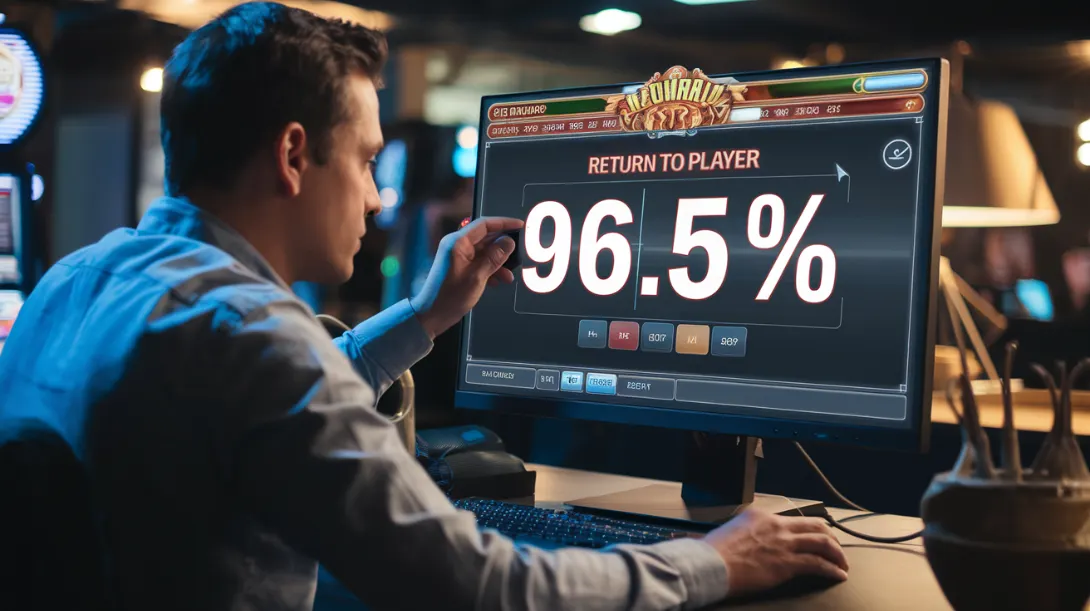
RTG typically provides three distinct RTP settings for their operators. The game looks identical, but the math engine is different:
It comes down to one word: Margins. Online casinos are businesses, and the RTP is effectively their “price.”
RTG casinos are famous for their massive “400% Welcome Bonuses.” To afford giving away that much free money, they often lower the RTP on the back end. It is a trade-off: you get a bigger starting balance, but the machine holds tighter.
When I review a site offering a “No Rules Bonus,” I immediately suspect they are running the games on the 91% setting to compensate.
In strict markets like the UK, casinos must display the RTP on every game screen. However, most RTG casinos operate out of Curacao or Costa Rica. These jurisdictions do not mandate the public display of RTP, allowing operators to switch settings without informing the player.
A 6% difference doesn’t sound like much, but in the world of slots, it is astronomical. It doubles the house edge, meaning your bankroll depletes twice as fast.
Here is the theoretical loss on $10,000 worth of spins (roughly 4-5 hours of play at $2/spin):
| RTP Setting | House Edge | Theoretical Loss | Playtime Impact |
|---|---|---|---|
| 97.5% (High) | 2.5% | $250 | Extended Play |
| 95.0% (Mid) | 5.0% | $500 | Standard |
| 91.0% (Low) | 9.0% | $900 | Rapid Bust |
As you can see, playing on the 91% setting effectively costs you nearly 4x more than playing the exact same game at a generous casino.
Since RTG doesn’t always display the number on the splash screen, you have to be a detective. Here are the three methods I use to audit a casino’s settings.
Load the game (e.g., Plentiful Treasure). Click the small “?” or “i” icon to open the rules. Scroll to the very bottom. Sometimes, lazy operators forget to hide the default text which might say “RTP: 95%”. If it is missing completely, be cautious.
Some transparent casinos publish monthly reports audited by TST or GLI. Look for a link in the footer called “Fairness” or “RTP Audit.” These reports show the actual aggregate payout for the month (e.g., “Slots: 95.4%”). This is the most accurate data point available.
Live chat agents are often trained to say “All our games are fair.” Don’t settle for that. Ask specifically: “What is the theoretical RTP setting for Bubble Bubble 3?” If they refuse to answer or say “it varies,” assume it is the low setting (91%).
Finding high-paying RTG slots requires playing at established brands that value retention over a quick buck.
I recommend checking our curated list of best RTG slots to win big. We only list casinos that run the 95% or higher versions of these games. If we catch a casino switching to 91%, we delist them.
It is also worth noting that newer slot developers are entering the US market. While RTG is a classic, comparing them to modern real money slots from developers like Betsoft or Rival (who often have fixed RTPs) is a smart move.
Yes. It is a standard industry feature offered by many providers (including Play’n GO and Pragmatic Play). It allows casinos to adapt to different tax rates in different countries. It is only “dishonest” if the casino claims a high RTP but secretly uses a low one.
No. The RTP is a fixed setting in the server configuration. A casino cannot flip a switch to lower the RTP while you are playing. They would need to take the server down for maintenance to change the configuration.
Yes. For progressive games like Megasaur or Aztec’s Millions, a portion of the RTP (often 1-3%) is contributed to the jackpot. This means the base game pays out less frequently to compensate for the massive top prize.
It is difficult. For players who want total transparency, looking for independent audit certificates (like those from eCOGRA) in the casino footer is the best verification method.
RTG slots don’t always pay the same, and casinos decide how generous they want to be. I never assume a game has a fixed RTP. I check the paytable, compare casinos, and prioritize sites that publish monthly fairness reports. High-RTP slots exist, but only at the right casinos. Don’t play blind—know the odds before you spin.

Mark TaylorChief Auditor • Updated: August 2, 2026 Yes, the cards are real and the stream is live. At a genuine live dealer table you are watching physical cards leave a physica...
The Mathematical Truth About Beating the Wheel Casino Mathematics by Mark Taylor Updated: March 16, 2026 I have mathematically tracked and played thousands of real-money online ...
Mark Taylor Analysis • Updated: January 26, 2026 Three Card Poker is the most successful proprietary casino table game of all time. Invented by Derek Webb in 1994, it was design...
Mark Taylor Slot Analysis • Updated: February 9, 2026 When you press “Spin” on a slot machine, you aren’t just engaging with graphics and sound effects; you ar...