-
Casinos
Online Casinos
Casino Software:
- Crypto
-
Casino Games
Casino Games:
- Real Money Slots
- Bonuses
- Banking
- Guide
 26 February 2025
 4 minutes to read


There is nothing more frustrating than finding a great slot, clicking “Deposit,” and seeing the dreaded “Transaction Declined” message. It happens to everyone—from new players to high rollers.
The good news? The casino almost never rejects your money because they don’t want it. 99% of the time, it is an automated flag triggered by your bank, a mistyped digit, or a blockchain network mismatch.
🛡️Editorial Transparency: We independently audit all casinos. We may earn a commission if you visit them through our links. Read our Editorial Policy.
In this troubleshooting guide, I will explain the hidden banking codes that block gambling transactions, why your crypto might be stuck in limbo, and the specific workarounds for US players.
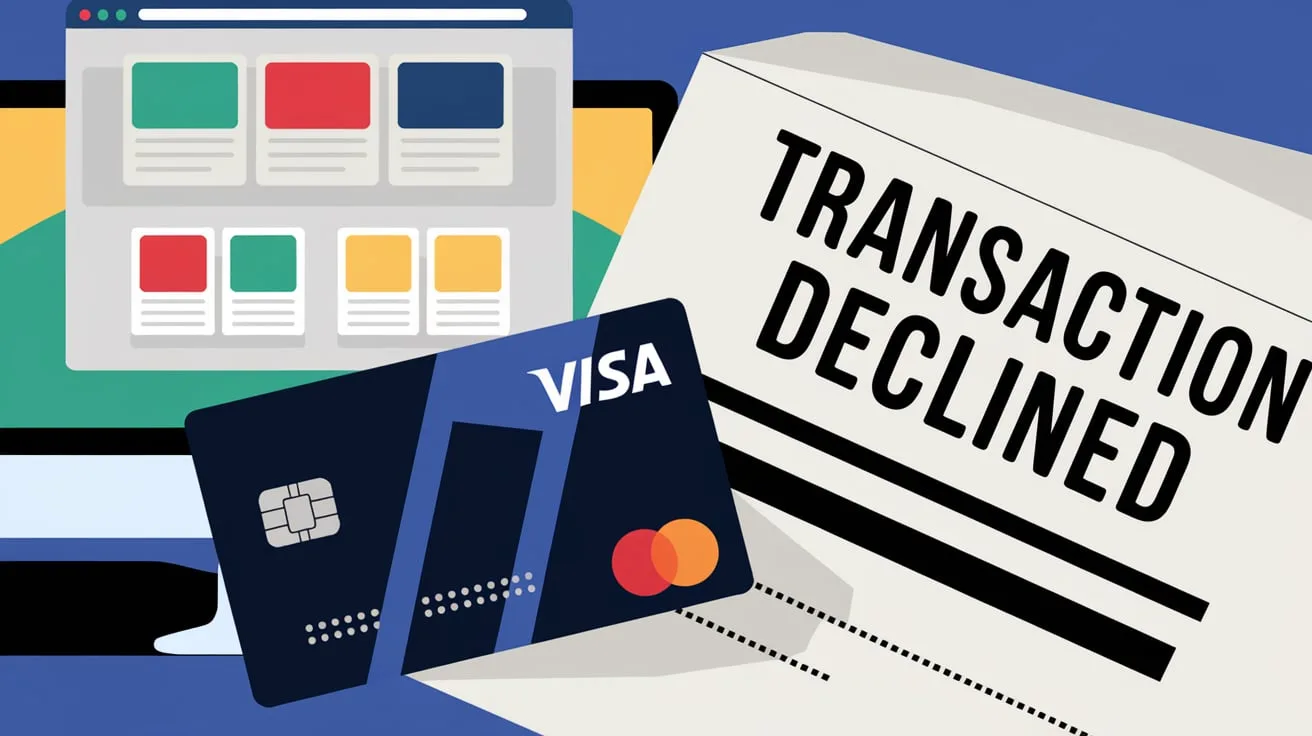
Many banks automatically decline gambling transactions, even if online casinos are legal in your state. This isn’t a personal judgment against you; it is an automated filter.
Every credit card transaction has a Merchant Category Code (MCC). The code for gambling is **7995**.
Banks like Chase, Bank of America, and Wells Fargo have hard-coded policies to decline 7995 transactions to avoid liability under the UIGEA law. This is why credit card deposits fail frequently, especially with Visa or Mastercard.
The Solution: If your card is declined, call your bank. Ask them to “allow an international transaction” (since many casinos are offshore). If they refuse due to the gambling code, you must switch to a debit card, a prepaid card, or crypto.
Modern payments use a security layer called 3D Secure (branded as “Verified by Visa” or “Mastercard Identity Check”).
When you click deposit, a pop-up window or a banking app notification should appear asking you to confirm the charge via SMS code or face ID.
Why it fails:
Always disable ad-blockers on the cashier page to ensure the 3D Secure window loads correctly. You can read more about how this tech works on the official Visa Security page.
If your bank simply won’t budge, stop trying the same card. Repeated declines can trigger a fraud freeze on your entire bank account. Instead, use these methods:
Crypto bypasses the banking system entirely. It cannot be blocked by Chase or Wells Fargo because you are the bank.
Go to a pharmacy and buy a “Visa Vanilla” or “Mastercard Gift Card.” Crucial Step: You must register the card online (set a zip code) and ensure it says “For International Use.” Domestic-only cards will fail at offshore casinos.
Crypto is reliable, but it is unforgiving. If your deposit hasn’t arrived after 30 minutes, it is usually one of these three errors:
This is the #1 error I see. Coins like USDT exist on multiple blockchains.
If the casino gives you an ERC-20 address and you send funds via the TRC-20 network, the money disappears into the void. Always match the network.
The “Low Gas” Error: Sometimes, your wallet deducts the network fee (gas) from the total amount sent. If you try to deposit exactly $20.00 but only $19.50 arrives (due to fees), the casino system might not trigger the automated credit. Always send slightly more than the minimum.
It sounds silly, but nearly 20% of rejections are due to typos.
| Error Message | Likely Cause | Quick Fix |
|---|---|---|
| “Do Not Honor” | Bank blocked it (MCC 7995). | Call bank or use Crypto. |
| “Insufficient Funds” | Foreign transaction fees reduced your balance. | Deposit $5 less than your max balance. |
| “Restricted Card” | Prepaid card is domestic only. | Buy a card labeled “International Use.” |
It might be unconfirmed on the blockchain. Use a Blockchain Explorer to search your Transaction ID. If it has 0 confirmations, the network is congested—just wait.
Typically no. They will just decline the transaction and maybe send a fraud alert text asking “Did you try to spend $100 at [Casino Name]?” If you reply YES, they might unlock the card, but future gambling attempts may still be blocked by policy.
Absolutely not. This is “Third-Party Banking” and is a major violation of Terms & Conditions. The casino might accept the deposit initially, but they will ban your account and confiscate winnings when you try to withdraw.
Only for regulated casinos in states like NJ, PA, or MI. Offshore casinos cannot use PayPal because PayPal strictly blocks unregulated gambling transactions globally.
Deposit rejections are usually a security feature, not a bug. Your bank is trying to “protect” you from what it sees as a high-risk transaction. The path of least resistance is to stop fighting the bank and switch to a method designed for this industry: cryptocurrency or a dedicated Play+ card. Once you make the switch, the “Declined” messages stop forever.

Mark TaylorChief Editor • Updated: August 7, 2026 MyBookie’s lobby runs Betsoft and Dragon Gaming. These are the 10 slots worth your money, six of them tested with our own...
Regulatory Analysis by Mark Taylor Updated: March 9, 2026 Believe it or not, Australian real money casino players absolutely can “bypass” strict verification and mandatory KYC (...
Mark TaylorChief Auditor • Updated: August 2, 2026 No. A courier check is the slowest and most expensive way to get money out of an offshore casino. Expect 10 to 15 days door to...
Mark Taylor Chief Auditor • Updated: January 16, 2026 Winning big at a casino feels great, but withdrawing your money without problems is equally important. Once the excitement ...